Healthcare Economics for Better Health-System Value

Applied Healthcare Economics
Mohannad Mahmoud Alarqan
Healthcare Economist | Healthcare Management | Hospital Efficiency | Health Innovation |
I am a healthcare economist focused on healthcare management, hospital efficiency, health-system value, health innovation, sustainability, digital transformation, and applied economic evaluation. My work explores how economic thinking can improve resource allocation, operational efficiency, and value-oriented decision-making in healthcare systems.
RESEARCH FOCUS & ACADEMIC ENGAGEMENT
Professional Activities
My professional activities span academic workshops, specialized training, international conference contributions, peer-review engagement, professional memberships, continuous professional development, invited academic contribution, and research networking across healthcare economics, hospital efficiency, digital health, simulation value, sustainability, public health, and health systems management. My conference contributions include participation in international and regional academic venues, with examples including events convened by leading institutions such as Hamad Medical Corporation and Weill Cornell Medicine–Qatar. I have also delivered specialized workshops at respected academic institutions, including Jordan University of Science and Technology, and pursued continuous professional development through reputable international institutions such as the University of Minnesota School of Public Health, the Digital Agency of Japan, and other global learning platforms. I serve as an Invited External Academic Contributor for teaching and project supervision in the Specialized Master’s Program in Management of Hospital Establishments at ENCG Agadir, Ibn Zohr University, Morocco. My professional memberships include ISPOR and Global Health Hub Germany, reflecting my engagement with international communities concerned with health economics, public health, health systems, and policy-oriented research. Through these activities, I aim to connect healthcare economics with practical healthcare management challenges, policy relevance, and applied health systems improvement.

Technological Innovation And Economic Growth Healthcare Context (Course) - CEIP/ Jordan University of Science and Technology .

sustainability in healthcare institution ( Training Workshop) CSDST /Jordan University of Science and Technology

Good Innovative Practices in Healthcare (Course) - CEIP/ Jordan University of Science and Technology .

The 2nd International Business School Conference - The Future of Sustainability in Business Environments: Tourism Development, Innovation, and Resilience

Weill Cornell Medicine - Qatar Exploring the Nexus of Climate, Health, and Environment


Academic Network & Professional Engagements


Social
Academic Profiles
Contact
Academic & Professional Inquiries
I welcome academic collaboration, research discussions, teaching opportunities, invited talks, and professional inquiries related to healthcare economics, healthcare management, hospital efficiency, health innovation, and health-system value.


My research is positioned at the intersection of health economics, healthcare management, and healthcare systems redesign. It is unified by a central question: how can healthcare systems and healthcare institutions manage the persistent tension within the Iron Triangle of Healthcare—cost, quality, and access—through evidence-informed decisions that improve value and reduce avoidable trade-offs?
I examine how healthcare value is created, lost, or redistributed through clinical decisions, organizational design, resource allocation, digital transformation, and policy choices. My work focuses on identifying and addressing low-value care, healthcare waste, operational inefficiencies, and resource misallocation that weaken system performance and limit access to high-quality care.
A major component of my research focuses on economic efficiency at the hospital and service-unit level. I study how hospitals and healthcare units allocate beds, staff, technologies, clinical capacity, time, and operational resources across departments and services. This includes patient flow, emergency care, intensive care, diagnostics, simulation centers, service delivery processes, and internal resource allocation under uncertainty.
Within this agenda, I am particularly interested in developing and testing healthcare production function models that explain how healthcare inputs—such as funding, workforce, beds, technologies, time, data, and organizational capabilities—are transformed into measurable outputs, outcomes, and system value. Rather than focusing only on productivity or cost reduction, this line of work aims to understand how healthcare production can generate balanced value across the three dimensions of the Iron Triangle: cost, quality, and access.
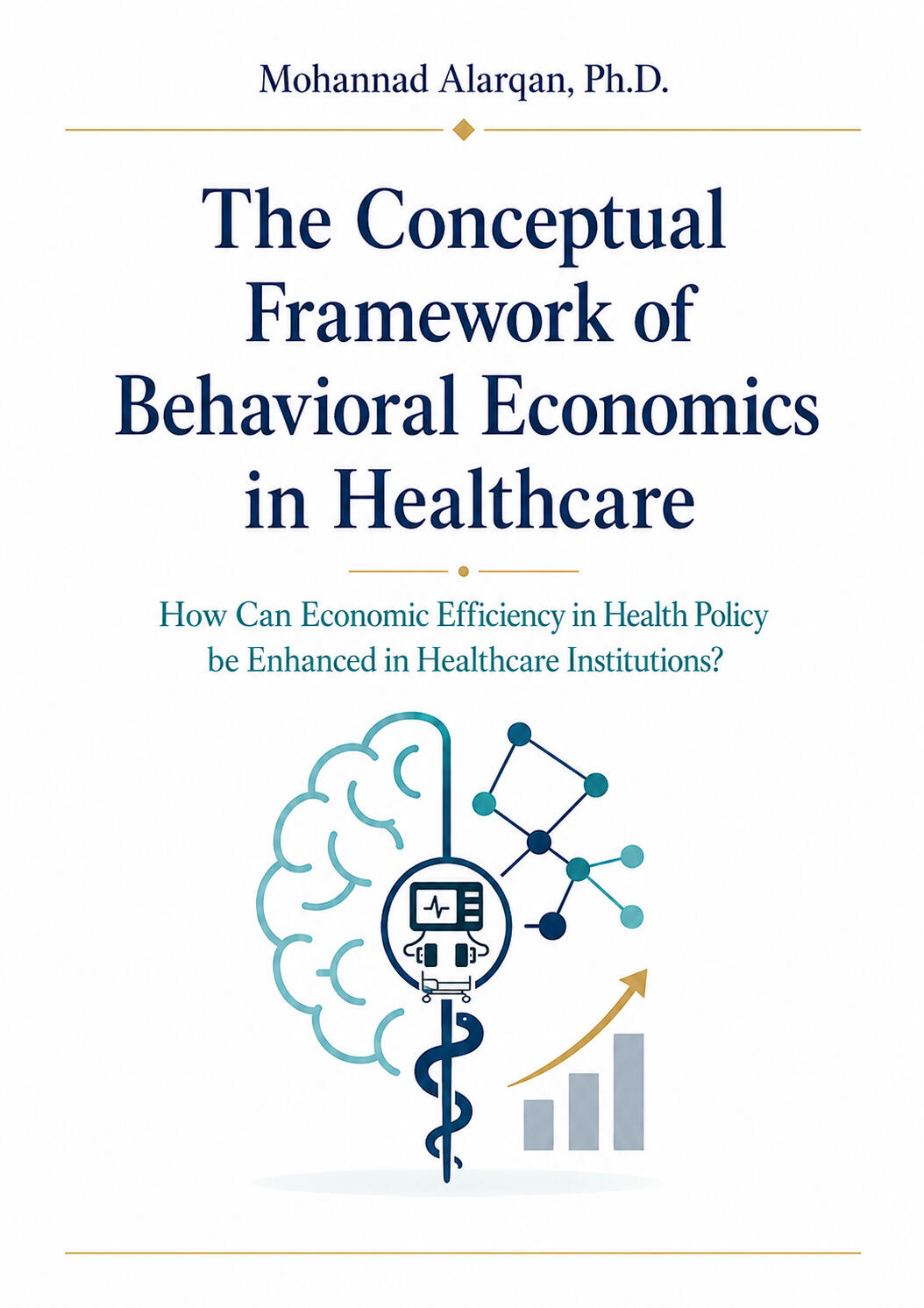
My research also incorporates a behavioral economic perspective on healthcare resource allocation. I examine how clinical behavior, risk perception, defensive medicine, incentives, information asymmetry, institutional norms, and decision-making biases influence the use of healthcare resources. This helps explain why inefficient or low-value services may persist even when more efficient, evidence-based alternatives exist.
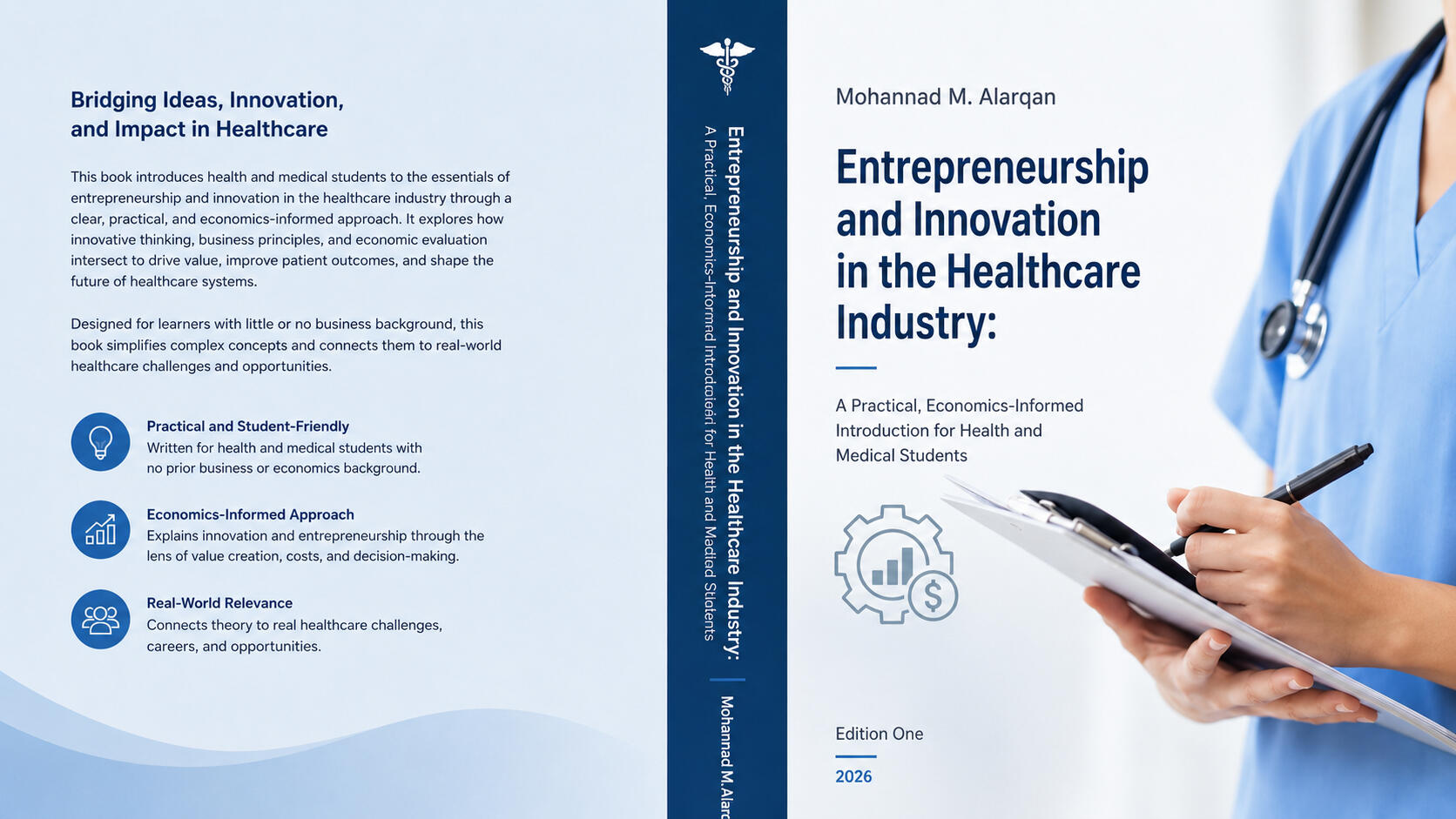
In addition, my work extends to the economic evaluation of healthcare innovation and digital transformation. This includes digital health governance, health information interoperability, real-time location systems, AI-enabled decision-making, low-cost digital simulation in health professions education, and technology-supported service redesign. I am particularly interested in innovations that are feasible, scalable, and valuable in resource-constrained settings.
My research is grounded in health economics, value-based healthcare, health technology assessment, cost-effectiveness theory, micro-costing, hospital efficiency analysis, healthcare production function modeling, behavioral economics, and the Iron Triangle of Healthcare. Across these areas, I aim to develop evidence-based frameworks, conceptual models, simulation-informed analyses, and policy-oriented recommendations that help decision-makers balance cost, quality, and access more effectively.
A major part of my work is concerned with MENA and resource-constrained healthcare systems, where improving value requires more than adopting global models. It requires context-sensitive, affordable, institutionally feasible, and policy-relevant solutions that can reduce waste, improve efficiency, strengthen resilience, and support more equitable access to care.
In one sentence: my research investigates how healthcare systems and institutions can use economic evaluation, healthcare production function modeling, behavioral insight, digital innovation, and organizational redesign to manage the tension between cost, quality, and access, aiming to create more efficient, equitable, and sustainable healthcare value.
Research Scope Categories
These research areas are unified by a common objective: developing evidence-informed ways to balance cost, quality, and access in healthcare systems and institutions.
Books
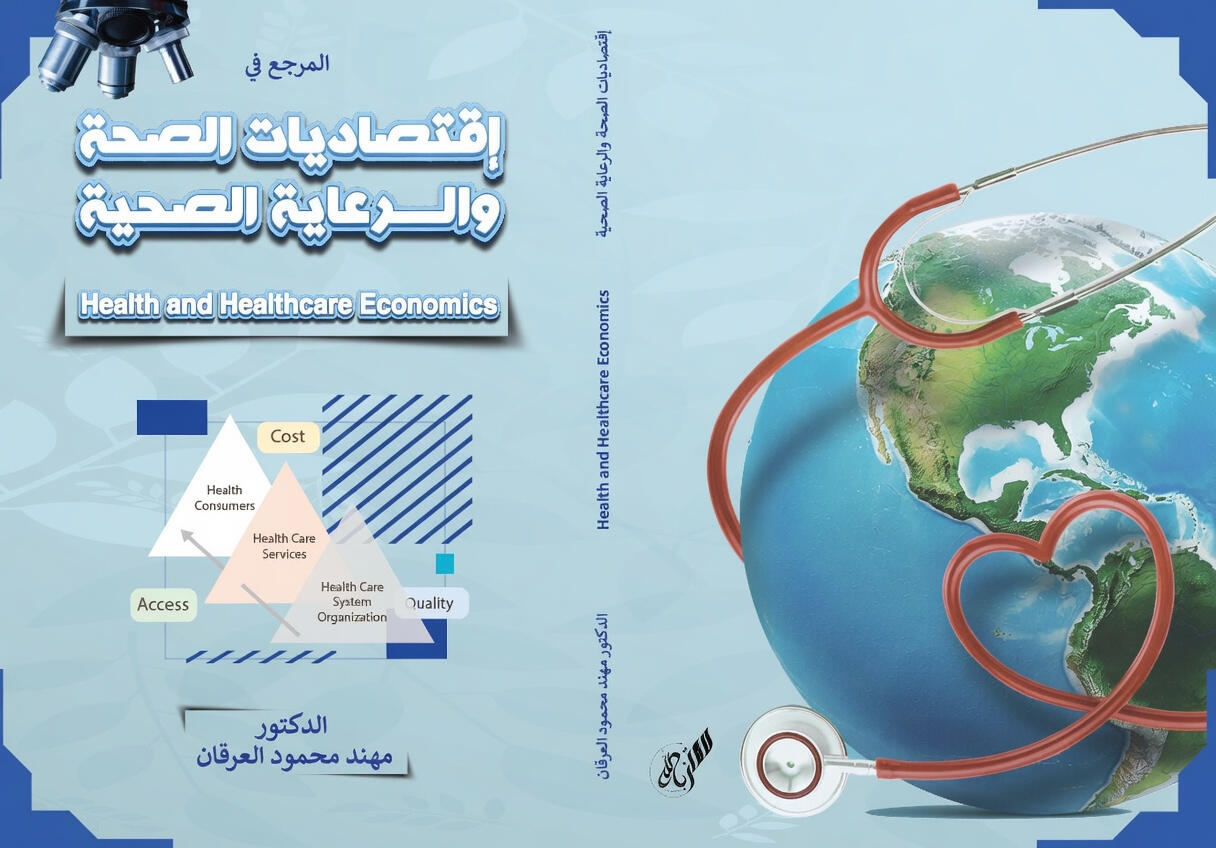
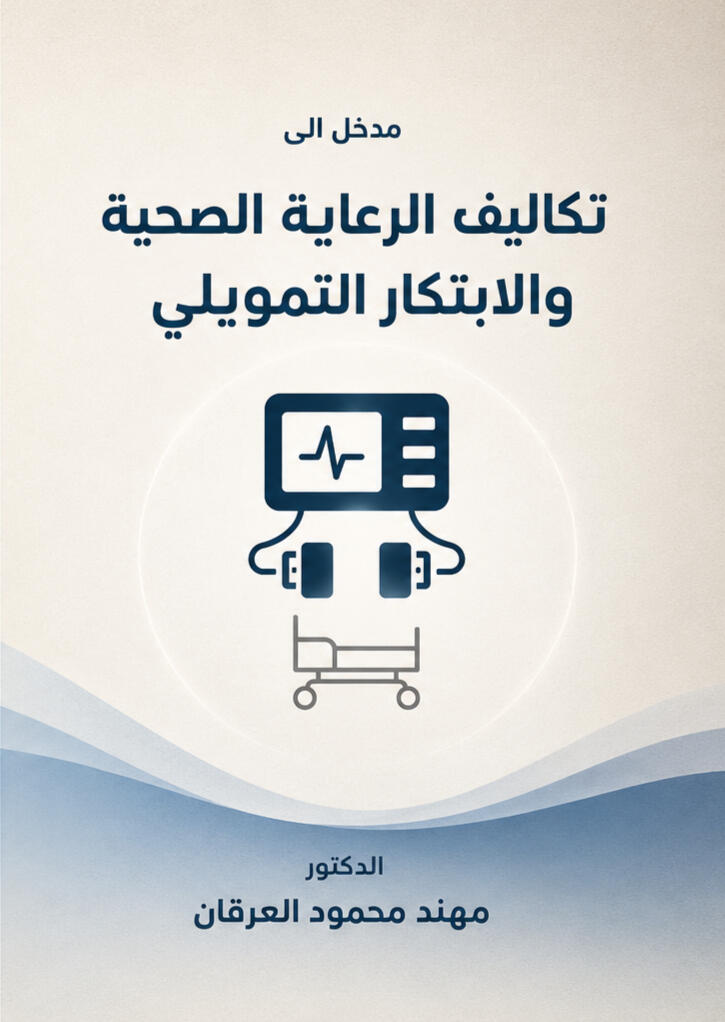
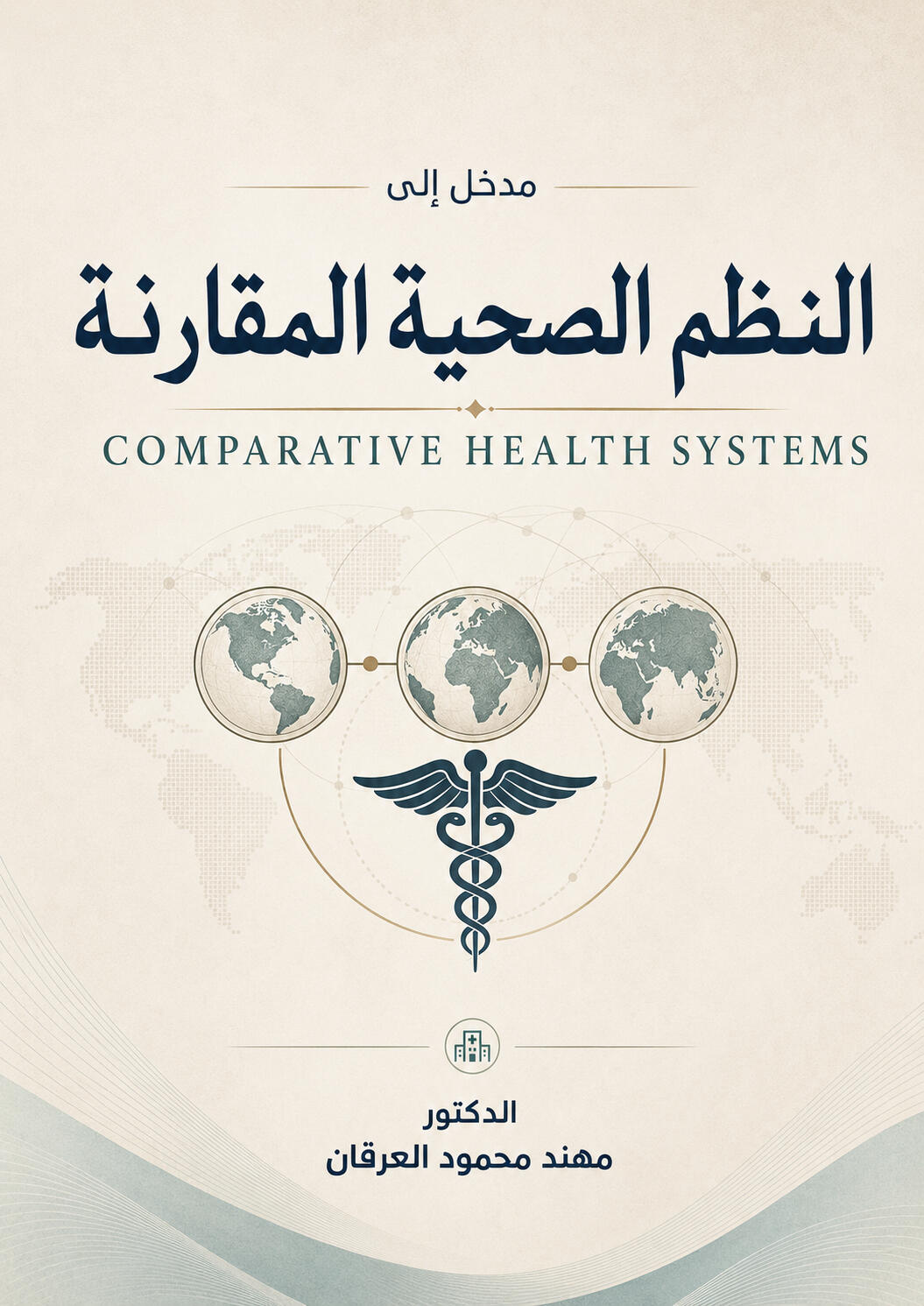
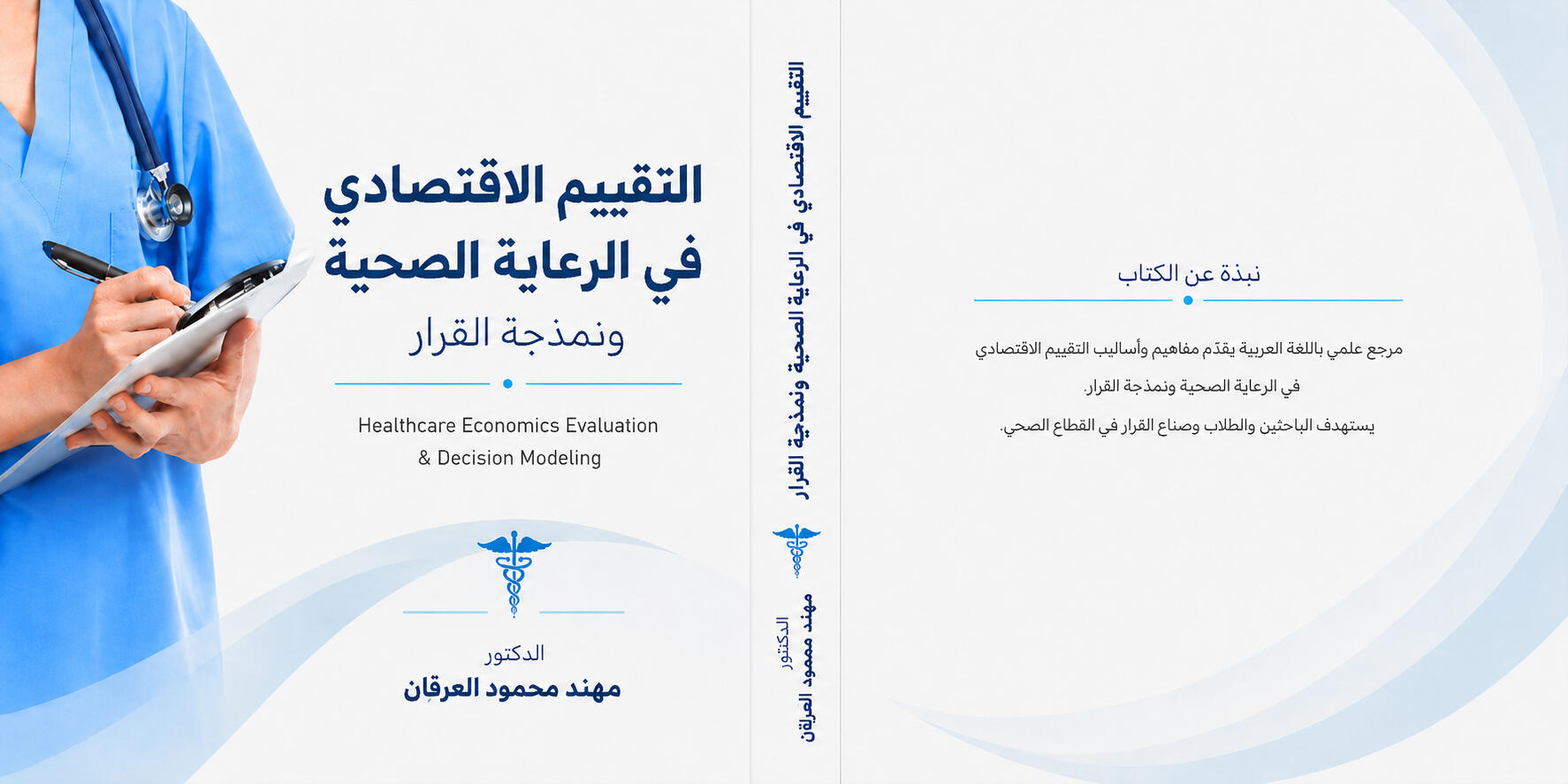
Health and Healthcare Economics is an Arabic reference book that explains the economic foundations of health and healthcare systems in a clear, structured, and applied way. It is designed for students, researchers, healthcare managers, policymakers, and professionals who need an accessible Arabic resource in a field where Arabic academic references remain limited.
A key feature of the book is its distinction between Health Economics and Healthcare Economics. Health economics looks at health as a broader social and economic value, including prevention, equity, wellbeing, and population health. Healthcare economics focuses more specifically on the financing, production, delivery, management, pricing, and evaluation of healthcare services.
The book covers major themes such as healthcare demand and supply, elasticity, medical goods, market failure, government intervention, health insurance, healthcare financing, regulation, cost containment, quality, access, and health inequalities. It also includes important units on healthcare services management, linking economic thinking to hospital administration, resource allocation, financial management, quality improvement, digital transformation, and patient safety.
Another distinctive part of the book is its unit on pharmacoeconomics, which discusses economic evaluation of medicines, pharmaceutical pricing, reimbursement, innovation, and the role of evidence in pharmaceutical policy and decision-making.
The book also addresses emerging topics such as behavioral health economics, digital health and artificial intelligence, and sustainability in healthcare. By combining theory, policy, management, and practical healthcare examples, the book seeks to fill an important gap in Arabic-language health economics literature and provide a comprehensive foundation for understanding how health systems make decisions under scarcity.
Healthcare Economics Series
General Interest Books



Selected WorkThis section presents a curated selection of my academic and professional work in healthcare economics, healthcare management, hospital efficiency, health innovation, and applied economic evaluation. It includes selected research manuscripts, conference contributions, teaching activities, and learning resources that reflect my interest in improving health-system value, resource allocation, institutional decision-making, and evidence-informed healthcare management.Rather than serving as a complete archive, this section highlights representative work that demonstrates my research focus, applied orientation, and commitment to connecting economic thinking with real-world healthcare challenges.

Poster presented at Qatar Health Congress 2026 (Hamad Medical Corporation).his poster presents an innovative economic modeling framework for telemedicine adoption aimed at reducing hospital readmissions. The model translates readmission reductions into cost offsets and identifies a practical “break-even” (decision-threshold) point at which telemedicine becomes cost-saving, supporting efficiency and cost-optimization decisions. The framework is designed to be actionable for hospital managers and policymakers, especially in settings where real-world data are limited and early-stage decision support is needed.

Participation in the Climate, Health, and Environment (CHE 2025) Conference, held over two days and organized by Weill Cornell Medicine–Qatar in Doha, included the presentation of the research paper titled “Economic Costs of Air Pollution: A Systematic Review of Disease Burden in the Middle East.” The study was presented within a competitive academic environment and received recognition for its relevance and analytical contribution to understanding the health and economic burden of air pollution in the region. It highlights the increasing importance of health economics in informing public health policy across the Middle East and emphasizes the need for evidence-based approaches to environmental health challenges. In addition to the oral presentation, a research poster was also presented, summarizing the key findings, methodological approach, and policy implications in a concise visual format designed to facilitate academic discussion and engagement with researchers and experts attending the conference. The participation contributed to scholarly exchange on climate-related health challenges and sustainable, data-driven policy strategies in the field of public health.
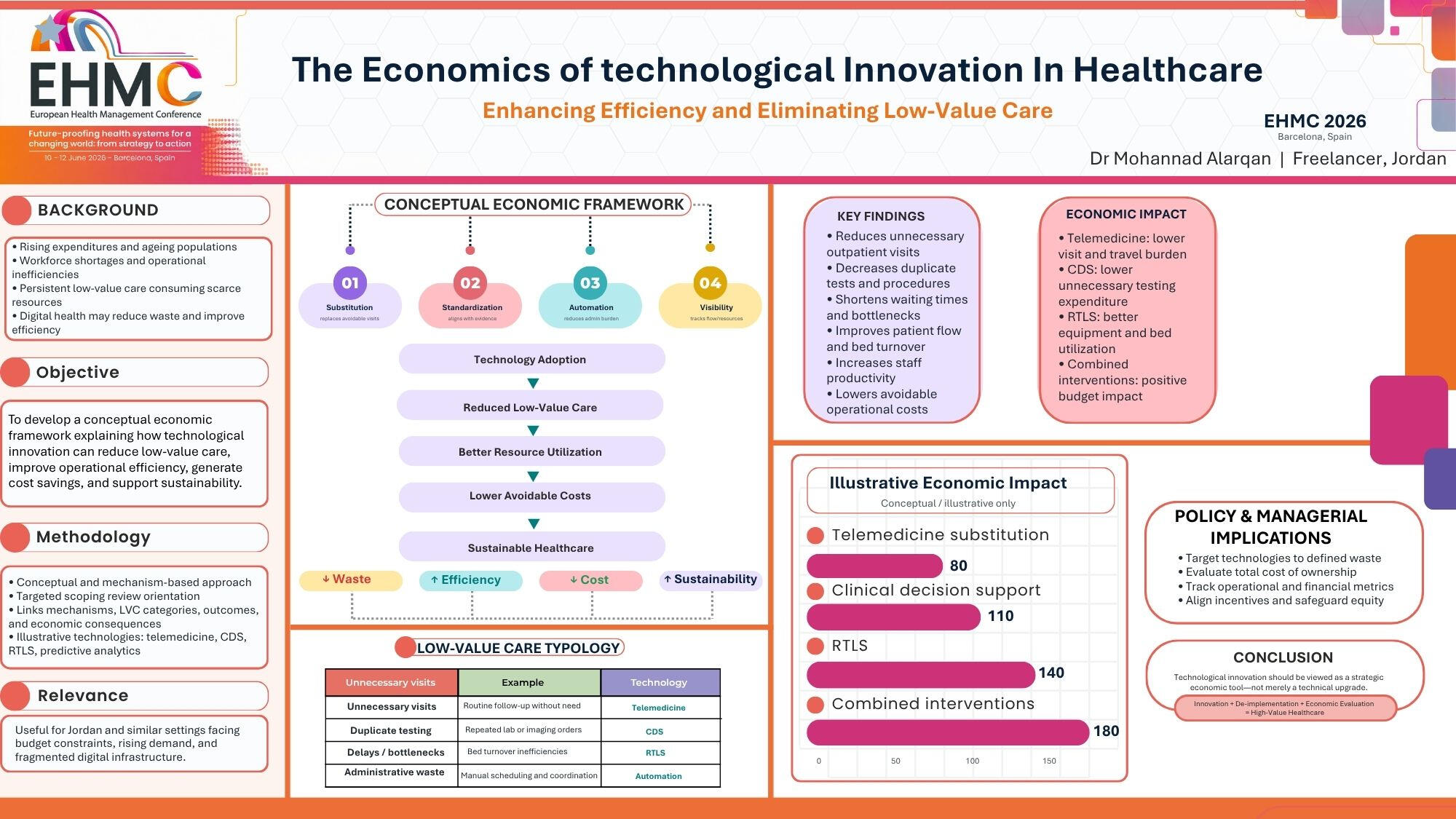
Presented at the European Health Management Conference (EHMC 2026) in Barcelona, Spain, this work delivers a robust, mechanism-based framework to evaluate the health economics of technological innovation. It addresses a critical challenge in modern health systems: ensuring that digital investments translate into genuine efficiency gains rather than added complexity. The paper systematically maps how digital health platforms, telemedicine, and real-time location systems (RTLS) can be leveraged as strategic tools to target operational waste and de-implement low-value care (LVC). By focusing on four key pathways—information continuity, encounter substitution, workflow automation, and operational visibility—the framework links technology adoption directly to capacity release and optimized patient flow. To bridge the gap between theory and hospital management, it provides leaders with an actionable pre-adoption governance checklist and a conservative budget-impact model. Ultimately, this research demonstrates that positive financial returns and sustained value are highly achievable, provided that technological deployment is coupled with supportive policy levers, interoperability standards, and aligned value-based payment incentives
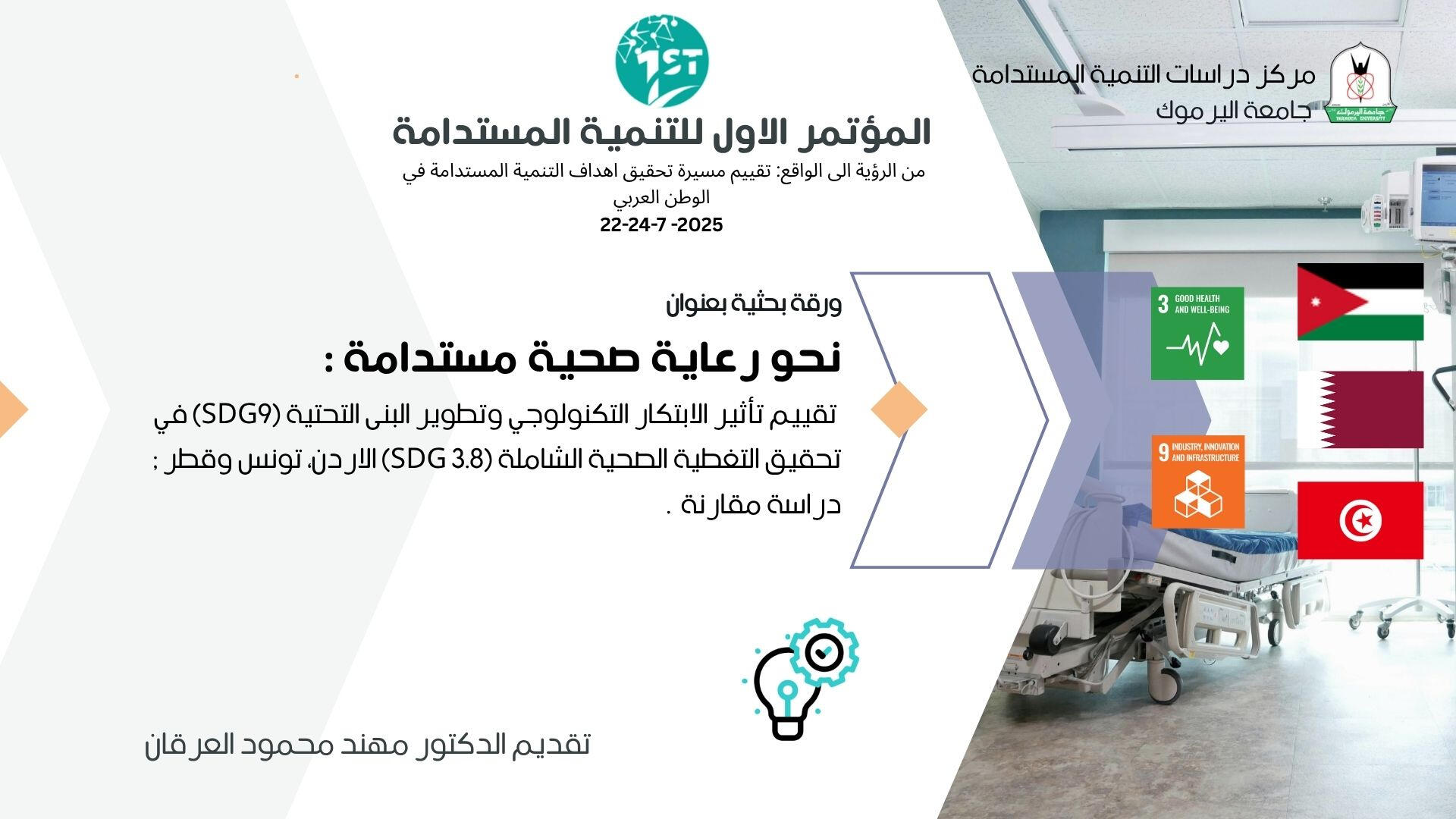
Towards Sustainable Healthcare: Assessing the Link Between Technological Innovation, Infrastructure Development (SDG 9), and Achieving Universal Health Coverage (SDG 3.8) in Jordan, Tunisia, and Qatar: This paper analyzes the complementary relationship between Sustainable Development Goal 9 (SDG 9), which focuses on industry, innovation, and infrastructure, and Target 3.8 of Goal 3, which aims to achieve Universal Health Coverage (UHC). Using a comparative framework between Jordan, Tunisia, and Qatar, this research highlights the policies and practices adopted by each country to support healthcare innovation and infrastructure development, while measuring their impact on the accessibility, quality, and sustainability of essential health services.
The analysis draws on statistical data and official documents from international organizations (such as the World Bank and the World Health Organization), alongside national reports and indicators. These indicators include research and development (R&D) expenditure, the localization rate of medical manufacturing, high-tech exports, and the quality of healthcare facilities.
The findings reveal a clear divergence in policy effectiveness. While Qatar has achieved significant technological advancement in infrastructure and innovation, it lacks effective integration with its broader healthcare strategy. Conversely, the Jordanian model demonstrates a moderate level of alignment between innovation and health financing, whereas Tunisia continues to face chronic financing challenges despite possessing a suitable structural foundation.
The paper concludes with a set of recommendations designed to strengthen integration between innovation policies and healthcare strategies. It also advocates for a participatory regional approach based on knowledge sharing and the strategic use of data and indicators to improve health governance and achieve the Sustainable Development Goals in an integrated manner.
Latest Project
Workplace Violence-Induced Defensive Medicine (WVIDM) in Emergency Care: A Healthcare Economics and Governance Study from Jordan

| Location | Project Period | Project Type | Funding | Current Status | Collaboration Status |
|---|---|---|---|---|---|
| (KAUH) Jordan | 2026–2027 | Hospital-based healthcare economics and governance study | Non-funded | Ongoing | Open to academic and clinical collaboration |
This hospital-based research project examines how exposure to workplace violence in emergency care settings may shape a specific form of defensive clinical behaviour, conceptualized as workplace violence-induced defensive medicine (WVIDM). The study explores the potential implications of this phenomenon for healthcare resource use, service efficiency, and hospital governance. The project is being implemented at King Abdullah University Hospital (KAUH) as an approved research study.